

Almost everyone who has flown with a power bank has had the same moment at the security tray: a slight pause while the officer looks at the device, sometimes a question about the capacity, occasionally a request to see the number printed on the back. Most of the time it's nothing. Sometimes it isn't, and a power bank gets held back or, rarely, confiscated. The people this happens to are almost never trying to smuggle anything; they just bought a power bank based on the wrong number, or didn't know the rules changed.
Here's the number that actually matters: airlines regulate power banks by watt-hours (Wh), not by milliamp-hours (mAh). A power bank up to 100Wh is allowed in your carry-on with no approval needed. Between 100Wh and 160Wh, you need the airline's permission in advance. Above 160Wh, it's not allowed on the aircraft at all, checked or carry-on. Most power banks sold in India never state their Wh figure clearly, which is exactly why this keeps catching people out.
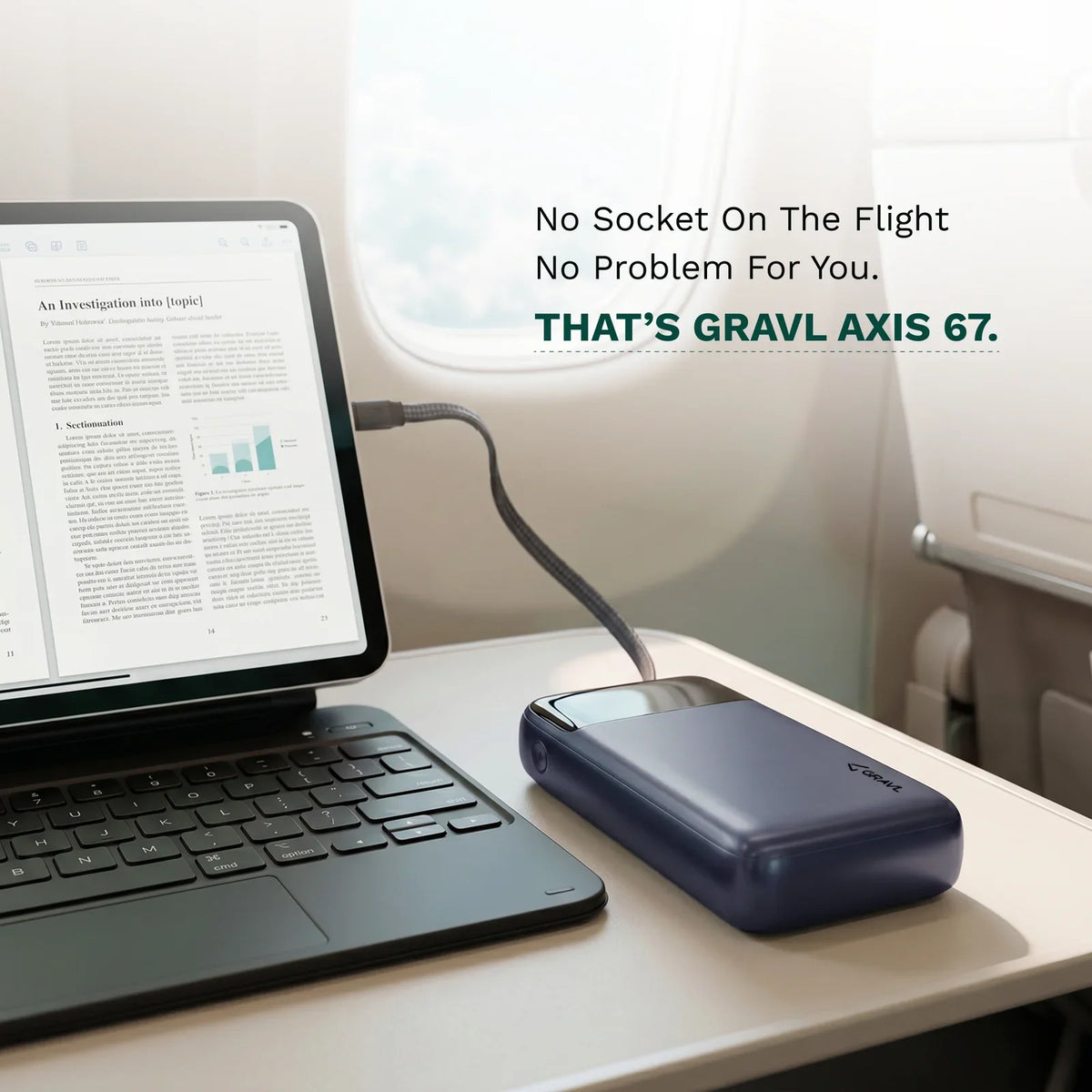
There's also a newer rule worth knowing before you fly, especially within India: as of early 2026, charging a device from a power bank during a flight is no longer permitted at all. Power banks can no longer be stored in the overhead bin; they have to stay in your seat pocket or under the seat in front of you for the entire flight. This guide covers both the long-standing capacity rule and this newer in-flight rule, along with the specific questions people search before a trip including whether a 27,000mAh power bank is flight-safe, and what the rule actually is on IndiGo and other Indian carriers.
The direct answer, if you're in a hurry
A power bank up to 100Wh flies in your cabin bag with no paperwork, on every major Indian and international airline. It must go in your hand luggage, never in checked baggage, and as of the newer 2026 rule on Indian flights it needs to stay in your seat pocket or under your seat, not the overhead bin, and it can't be used to charge anything during the flight itself.
Why mAh Is the Wrong Number to Check
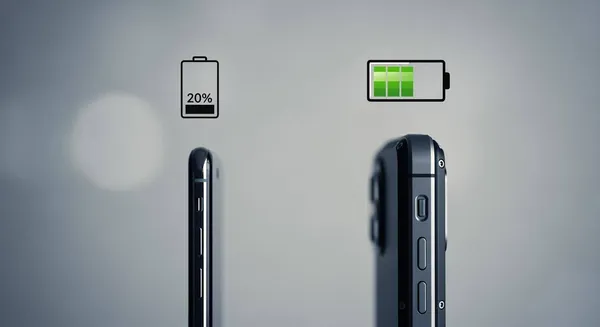
Every power bank has an mAh figure printed on it 10,000mAh, 20,000mAh, 27,000mAh and it's tempting to assume airlines care about that number directly. They don't, and the reason is simple: mAh measures how much charge a battery holds, but it doesn't tell you how much energy that represents unless you also know the battery's voltage. Two power banks can share the same mAh figure and have meaningfully different Wh ratings depending on their internal cell voltage.
The actual formula is straightforward:
Watt-hours = (mAh ÷ 1000) × voltage
Most power bank cells run at a nominal voltage of 3.6V to 3.7V. So a 20,000mAh power bank at 3.6V works out to roughly 72Wh comfortably under the 100Wh limit. A 27,000mAh power bank at the same voltage comes to about 97.2Wh still under the limit, but close enough to it that a well-designed power bank at this capacity is deliberately engineered to stay just inside the ceiling rather than drift over it by accident.
This is also why two power banks with identical mAh numbers can have different flight status. If you only check the mAh figure, you genuinely don't know which side of the rule you're on.
Quick Reference: mAh to Wh at a Glance
|
Capacity (mAh) |
Approx. Wh at 3.6V |
Flight status |
|
10,000 mAh |
36 Wh |
Flies freely, no approval needed |
|
20,000 mAh |
72 Wh |
Flies freely, no approval needed |
|
27,000 mAh |
97.2 Wh |
Flies freely, no approval needed just under the 100Wh line |
|
28,000 mAh |
~100.8 Wh |
Needs airline approval before you fly |
|
45,000 mAh |
~162 Wh |
Not permitted on board at all |
If your power bank states its Wh rating directly GRAVL's do, printed on the unit you don't need to calculate anything. If it only shows mAh, this table gets you close enough for any power bank using a standard lithium-ion or lithium-polymer cell.
Can I Carry a 27,000mAh Power Bank in Flight?
Yes. At roughly 97.2Wh, a 27,000mAh power bank sits under the 100Wh threshold, so it's permitted in carry-on baggage on any domestic or international flight without needing prior airline approval. This is one of the most common specific questions people search before a trip, because 27,000mAh sits close enough to the limit that it's reasonable to want certainty rather than assume. The GRAVL Engine 240, for example, is built to exactly this capacity 97.2Wh deliberately engineered to sit under the ceiling rather than approach it as an afterthought.
New for 2026: You Can No Longer Charge Devices In-Flight in India
This is the update most travellers haven't caught up to yet. Since early 2026, using a power bank to charge a phone, tablet, or laptop during a flight is no longer permitted on Indian carriers; this includes plugging into the aircraft's own in-seat power outlets while also drawing from a power bank. The rule followed a series of lithium battery incidents on aircraft worldwide, and the reasoning is specifically about where a battery is when something goes wrong: a device actively charging is more likely to be handled carelessly, tucked somewhere hard to reach, or left unattended.
Alongside this, power banks are no longer allowed in overhead bins on Indian flights; they have to stay in your seat pocket or under the seat ahead of you, visible and within reach for the whole flight. If a power bank starts feeling unusually warm, smells odd, or shows any sign of swelling, the rule is to tell the cabin crew immediately rather than deal with it yourself.
None of this changes the underlying capacity rule; a power bank still needs to be under 100Wh to fly without approval, and it still has to travel in carry-on, never checked. What's changed is what you can do with it once you're in your seat: it can travel with you and be ready to use the moment you land, but it can't be actively charging anything mid-flight, and it has to stay somewhere you can reach it, not stowed overhead.
Power Bank Rules on IndiGo and Other Indian Airlines
IndiGo, Air India, Vistara, SpiceJet, and every other carrier operating in India apply the same underlying framework, based on international standards for lithium battery transport that airlines worldwide follow. There isn't a separate, stricter "IndiGo rule" that contradicts the general 100Wh / 160Wh / carry-on-only framework, or the newer in-flight charging and seat-pocket-storage rule that apply consistently across Indian carriers rather than varying airline by airline.
What can vary slightly between airlines is how they handle the 100–160Wh approval process, and how strictly ground staff check devices at the gate versus security. The safest approach, regardless of which airline you're flying, is the same: carry a power bank that's clearly under 100Wh, keep it in your seat pocket rather than the overhead bin, don't use it to charge anything mid-flight, and if the Wh rating isn't printed on the device, know how to calculate it before you're standing at the tray.
Is a Power Bank Safe to Carry Through Airport Security?
Yes, for the overwhelming majority of power banks people fly with. Security screening for power banks isn't really about danger in the way it's sometimes assumed to be; it's about verifying the capacity is within the permitted range and confirming the battery shows no signs of physical damage or swelling. A power bank that's under 100Wh, undamaged, and carried in your hand luggage will clear security the same way a phone or laptop does.
A few practical things do matter for a smooth experience:
-
Keep it in carry-on, always. Power banks are never permitted in checked baggage, on any airline, regardless of capacity. This is the one rule with genuinely zero exceptions.
-
Keep it in your seat, not the overhead bin, once you're on board. This is the newer 2026 rule specific to Indian flights, and it applies for the whole flight, not just takeoff and landing.
-
Don't try to charge anything from it mid-flight. This is now against the rules on Indian carriers, not just discouraged.
-
Check for visible damage before you fly. A swollen, dented, or physically compromised power bank can be refused at security even if its Wh rating is fine and reasonably so.
-
If the Wh rating isn't printed, do the math beforehand, using the formula above, rather than finding out for the first time at the tray.
What security screening is generally not concerned with is quantity, within reason. Most airlines don't limit you to carrying a single power bank; the concern is the capacity of each unit, not how many compliant power banks you're travelling with. That said, some airlines do apply a soft limit around two units per passenger as a practical matter, so it's worth checking your specific airline's baggage policy if you're travelling with more than one or two.
What This Looks Like at Different Airports
The actual screening experience varies a little by airport rather than by airline. At busier Indian airports Delhi, Mumbai, Bengaluru security staff handle enough power banks daily that a compliant one rarely draws more than a glance. At smaller domestic airports, staff may ask more questions simply because they see fewer of them, which isn't a sign anything is wrong, just a difference in daily volume. Expect to also see more visible reminders about the in-flight charging ban and seat-pocket rule at gates and check-in counters through 2026, as airports and airlines roll out updated signage for the newer rule.
What Happens If Your Power Bank Is Over the Limit?
Between 100Wh and 160Wh, you can still fly with it, but you need to get the airline's approval in advance; this typically means contacting the airline before your trip, not showing up and asking at the gate. Above 160Wh, the power bank simply isn't permitted on the aircraft in any form, and airlines will not make exceptions at the airport. This is why buying a power bank engineered to sit comfortably under 100Wh in the first place is the simpler solution for most travellers, rather than owning something that needs a lookup and a phone call before every trip.
Why the Capacity Rule Exists in the First Place
It's worth understanding why airlines care about this at all, because it makes the rule easier to remember than a number alone. Lithium-ion and lithium-polymer batteries, the kind in every power bank, can, in rare cases, enter a failure state called thermal runaway, where internal damage or a manufacturing fault causes the cell to heat rapidly and potentially ignite. This is genuinely rare, but when it happens on an aircraft, the response options are limited compared to on the ground, which is why aviation authorities treat lithium battery capacity more conservatively than most other consumer electronics rules and it's the same underlying reasoning behind the newer seat-pocket and no-in-flight-charging rules: a battery is safest when it's visible, reachable, and not actively under load.
This is also the reasoning behind the checked-baggage rule specifically. In the cabin, a crew member can respond immediately if something goes wrong with a device. In the cargo hold, nobody would notice until it was too late to act. That's the actual logic behind "carry-on only," and it's not negotiable on any airline, regardless of your power bank's Wh rating.
Domestic vs International Flights
The 100Wh / 160Wh capacity framework is consistent across domestic Indian routes and international flights departing from or arriving in India, because it's based on standards that most of the world's airlines and aviation authorities have adopted. The newer in-flight charging and seat-pocket rules are specific to Indian carriers and Indian-departing flights as of early 2026 if you're connecting through India on a multi-airline itinerary, it's worth assuming the stricter rule applies for that leg, even if your other carriers haven't adopted the same restriction yet.
Common Mistakes People Make With Power Banks and Flights

Assuming a "flight safe" sticker means anything on its own. Some power banks carry marketing language like "TSA approved" or "flight safe" without stating an actual Wh figure anywhere on the unit. A label isn't a substitute for the number; always look for the Wh rating printed on the device itself.
Packing the power bank in checked luggage because the bag was already full. This is one of the most common reasons power banks get flagged during baggage handling, and it's an easy mistake to make when a cabin bag is already at its limit. If your carry-on is full, the power bank is the one item that has to stay with you regardless.
Stowing it in the overhead bin out of habit. This was fine before 2026 and isn't anymore on Indian flights; it needs to stay within reach at your seat for the whole journey now.
Trying to top up a phone mid-flight the way you always have. Charging from a power bank during the flight is no longer allowed on Indian carriers, even if it feels like a harmless habit from before the rule changed.
Buying based on mAh alone and assuming "it's just a power bank, it'll be fine." Most of the time this is true, simply because most power banks on the market are well under the limit by default. But the exceptions of very high-capacity power banks in the 25,000mAh–40,000mAh+ range are exactly the ones where checking the actual Wh figure matters most.
A Quick Pre-Flight Checklist
-
Confirm the Wh rating printed on your power bank, or calculate it from the mAh figure using the formula above.
-
Pack it in your carry-on bag, not checked luggage no exceptions, on any airline.
-
Plan to keep it in your seat pocket or under your seat during the flight, not the overhead bin.
-
Don't plan on charging anything from it mid-flight; it's no longer permitted on Indian carriers.
-
Check for any visible swelling, dents, or damage before you travel.
-
If it falls between 100Wh and 160Wh, contact your airline in advance for approval.
If flying is a regular part of your work or life, the easiest fix for the capacity side of this is buying a power bank where the Wh rating is stated clearly and sits confidently under the limit, rather than one where you're doing arithmetic at the airport. GRAVL's laptop range the Axis 67, Forge 130, and Engine 240 is built around this exact principle: every model states its Wh rating on the unit, and every model sits well inside the 100Wh ceiling, with the Engine 240's 97.2Wh representing the highest capacity GRAVL offers that still flies with zero paperwork. You can see the full range on the laptop power bank collection.
FAQ
How many mAh power banks are allowed on a flight in India?
There's no direct mAh limit airlines regulate by watt-hours, not mAh. In practical terms, most power banks up to around 27,000–28,000mAh (roughly 97–100Wh, depending on voltage) fall under the 100Wh threshold and fly with no approval needed.
Can I carry a 27000mAh power bank in flight?
Yes. A 27,000mAh power bank works out to approximately 97.2Wh, which is under the 100Wh limit, so it's permitted in carry-on baggage with no prior approval on any domestic or international flight.
Can I charge my phone from a power bank during a flight in India?
No, as of the newer 2026 rule charging a device from a power bank during a flight is no longer permitted on Indian carriers, and power banks must stay in your seat pocket or under the seat rather than the overhead bin for the entire flight.
What is the power bank rule on IndiGo?
IndiGo follows the same framework as every other Indian carrier: power banks up to 100Wh fly freely in carry-on, 100–160Wh need advance airline approval, anything above 160Wh isn't permitted on board, and as of 2026, in-flight charging and overhead bin storage are no longer allowed. There's no separate, stricter IndiGo-specific limit beyond this.
Is it safe to carry a power bank on a plane?
Yes, for any power bank under 100Wh that's undamaged and carried in your hand luggage this covers the vast majority of power banks in everyday use. Power banks are never allowed in checked baggage, regardless of capacity, and as of 2026 they need to stay at your seat rather than in the overhead bin.
How do I know my power bank's Wh rating if it only shows mAh?
Divide the mAh figure by 1,000, then multiply by the battery's voltage; most lithium-ion and lithium-polymer power banks run at 3.6V to 3.7V. A 20,000mAh power bank at 3.6V works out to roughly 72Wh, for example.

Leave a comment
This site is protected by hCaptcha and the hCaptcha Privacy Policy and Terms of Service apply.