
Buying a power bank sounds simple until you actually start looking. There's mAh, there's wattage, there's fast charging, there's PD, there's a warranty that might be six months or might be four years, and every listing seems to shout the same handful of words at you. Most people end up picking whichever one has the biggest number on the box, or the one that's cheapest, and hope for the best.
That approach usually works out fine for light use. It falls apart the moment you need a power bank for something specific, like keeping a laptop charged through a work trip, or getting through a full day of heavy phone use without a second thought. This guide walks through the choice properly, in the order that actually matters, so you end up with something that fits how you'll use it instead of something that just looked impressive in the listing.
Start With What You're Actually Charging
The single biggest mistake people make is choosing a power bank before deciding what it needs to power. A power bank that's perfect for topping up a phone twice a day is nowhere near enough for a laptop, and a power bank built for a laptop is more than most people need if all they're charging is a phone and a pair of earbuds.
Ask yourself one question before anything else: what's the heaviest thing this power bank will ever need to charge? If the answer is just a phone, your decision gets a lot simpler and cheaper. If the answer includes a laptop, wattage becomes the number that matters most, and capacity becomes secondary to it. If you're not sure yet, it's worth reading through the rest of this guide with your laptop in mind, since it's the harder case to get right.
Capacity (mAh) Tells You How Long, Not How Fast
Milliamp hours, or mAh, is the number most listings lead with, and it's also the one people misunderstand most often. Capacity tells you roughly how much charge a power bank holds in total, which translates into how many times it can top up your devices before needing a recharge itself. It does not tell you how fast it charges anything, and it doesn't tell you whether it can charge a laptop at all.
As a rough guide for everyday use:
|
Capacity |
Roughly good for |
|
5,000 to 10,000 mAh |
One to two phone charges, light daily top ups |
|
10,000 to 20,000 mAh |
Two to four phone charges, or a tablet plus a phone |
|
20,000 mAh and above |
Multiple devices over a full day, or a laptop alongside a phone |
Higher capacity also means a heavier, bulkier power bank, so there's a real tradeoff between how long it lasts and how much you want to carry around. Buying far more capacity than you'll ever use just adds weight to your bag for no benefit.
Wattage Is the Number That Actually Decides Charging Speed

If capacity is about how long a power bank lasts, wattage is about how fast it delivers power, and this is the number that decides whether a device charges quickly or crawls along. It's also the number that determines whether a power bank can charge a laptop at all, since laptops need meaningfully more power than phones do.
Phones generally charge well anywhere from 18W up to around 65W depending on the model. Laptops need a lot more, and the exact number depends entirely on the laptop. A thin, light laptop like a MacBook Air typically needs somewhere around 65W to charge at full speed. A more demanding laptop, like a 16 inch MacBook Pro under heavy use or a gaming laptop, can need anywhere from 100W up to 240W.
This is why a power bank marketed simply as "laptop compatible" can still disappoint you badly. Being able to plug a laptop in isn't the same as charging it at a usable speed. If you're buying specifically to keep a laptop charged, check your laptop's own charger for its rated wattage, usually printed right on the adapter, and choose a power bank that matches or slightly exceeds that number.
What PD Actually Means, in Plain Terms
You'll see "PD" or "USB-C Power Delivery" mentioned constantly, and it's worth understanding what it actually does rather than just treating it as a buzzword. PD is the system that lets a power bank and a device talk to each other and agree on how much power to send. Without it, or with a weak implementation of it, a device might charge slowly even if the power bank's wattage number looks high on the box.
This matters in a very practical way. A power bank can list "100W" and still fail to charge a specific laptop properly if its PD support doesn't correctly negotiate with that laptop's charging system. The wattage number is only meaningful once that negotiation actually works, which is why it's worth buying from a brand that states its real PD specification clearly rather than a single headline number and nothing else.
How Many Devices Do You Need Charged at Once
Think honestly about your actual daily bag, not an ideal version of it. Most people carry a phone. A good number also carry a laptop, earbuds, or a tablet. If you regularly need two or more devices charging at the same time, ports matter as much as raw wattage.
Some power banks split their total wattage across whatever's plugged in, which means each device charges more slowly the more things you connect. Others use independent output channels, where each port delivers its own dedicated power regardless of what else is connected, so nothing slows down just because something else is also charging. If simultaneous charging matters to you, particularly a laptop and a phone at the same time, this distinction is worth checking specifically rather than assuming every power bank handles it the same way.
Built In Cables Versus Carrying Your Own
Small detail, genuinely useful in daily life. Some power banks include a built in cable, sometimes two, so you're never caught out having forgotten one. Others rely entirely on you bringing your own cable, which is fine as long as you remember, and less fine the one time you don't.
If you travel often, or you're someone who's lost more cables than you'd like to admit, a built in cable is a small feature that ends up mattering more than it sounds like it should on paper.
Safety Should Never Be an Afterthought
It's easy to treat safety as a given when every listing claims to be certified and protected, but the details are worth a genuine look rather than a glance. Look specifically for BIS certification if you're buying in India, since it's the actual regulatory standard rather than a vague marketing claim. Look for stated protection against overcharging, overheating, and short circuits, ideally described specifically rather than just labeled "smart protection" without detail.
Battery chemistry is also worth understanding, even briefly. Most power banks use standard lithium-ion or lithium polymer cells, which are safe under normal use but can be vulnerable to a failure mode called thermal runaway if damaged or poorly made. Newer semi-solid-state batteries, which replace the liquid electrolyte inside the cell with a partially solidified one, are meaningfully more resistant to this failure mode. It's not a claim that any battery is completely risk-free, since no battery chemistry is, but it's a real, chemistry-level difference worth knowing about if safety is a genuine priority for you rather than an afterthought.
Warranty Length Tells You How Much a Brand Actually Trusts Its Own Product
This is the part almost every buying guide skips, and it's one of the most useful signals available to you. A power bank is a device most people only think about again when it stops working properly, often a year or two after buying it, which means the warranty is the one promise that gets tested long after the purchase decision was made.
Most power banks sold in India carry a warranty somewhere between six and eighteen months. A small number of brands back their products for considerably longer, sometimes up to four years, split between a shorter unconditional period on the full product and a longer period specifically covering the battery, which is the part most likely to degrade over time. A brand willing to commit to years rather than months is making a statement about how confident it actually is in what it built, not just what it's willing to print in an advertisement.
If You're Choosing a Power Bank for a Laptop Specifically
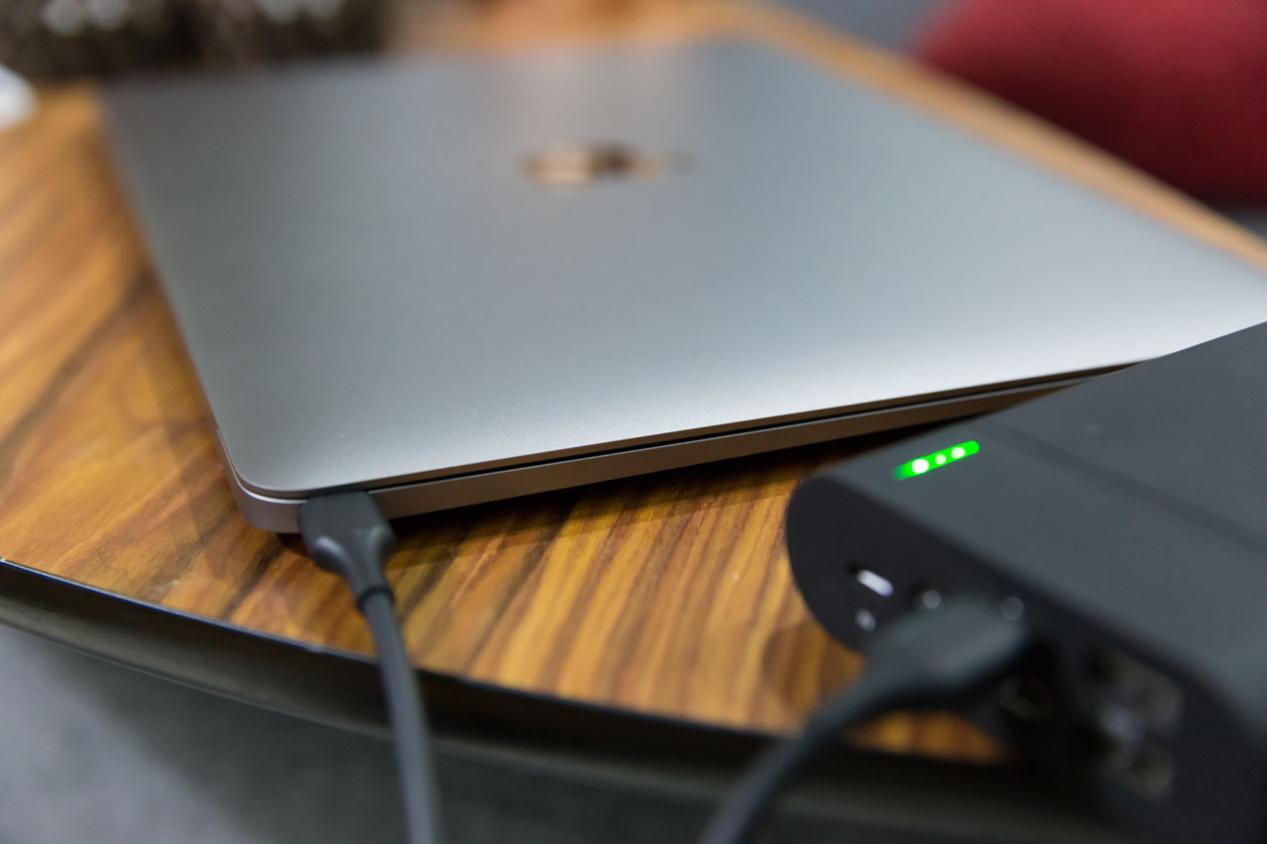
Since this is the case most generic buying guides handle worst, it deserves its own straightforward checklist. Check your laptop's actual rated charging wattage first, from its own adapter or its technical specifications. Choose a power bank that matches or slightly exceeds that number, not the biggest number available regardless of whether your laptop can use it. If you'll also be charging a phone or another device at the same time, look specifically for independent output ports rather than shared wattage. Confirm the power bank states a real PD specification, not just a headline wattage figure.
GRAVL builds its laptop range around exactly this logic. The Axis 67 is sized for ultrabooks like the MacBook Air, delivering 67W that matches what these laptops actually draw. The Forge 130 splits 130W across two independent 65W outputs, built for a laptop and a phone charging at full speed together. The Engine 240 delivers 240W total, built for the most demanding laptops, including gaming and creator machines that draw well beyond what a typical power bank can supply. Every model in the range carries the same 4 year warranty, the longest currently offered on a power bank in India, so the decision comes down to matching wattage to your laptop rather than weighing warranty terms between models. You can browse the full range on the laptop power bank collection.
If your priority is chemistry level safety above everything else, the semi solid state Core 30 is worth a look too, though it's built for phones, tablets and earbuds rather than laptop charging specifically.
The Difference Between a Good Deal and a Good Power Bank
Price comparison sites make it easy to sort by cheapest first, and that instinct isn't wrong exactly, it's just incomplete. A power bank that fails in eight months and gets replaced with another cheap one isn't actually cheaper over two or three years than a slightly pricier one that's still working fine. The honest way to compare cost is to think in terms of cost per year of reliable use, not just the number on the price tag today.
This is genuinely hard to judge from a listing alone, since every brand claims reliability. The two signals that actually correlate with real durability are warranty length, since a brand backing a product for years has to be confident it will actually last that long, and whether the listing states specific, checkable facts like certification numbers and cell chemistry rather than only adjectives like premium or advanced. A listing full of enthusiastic language and short on specifics is worth extra scrutiny, not extra trust.
Common Regrets People Have After Buying the Wrong Power Bank
A few patterns come up again and again once people have lived with a power bank for a while, and they're worth knowing before you buy rather than after.
Buying too much capacity for actual use is one of the most common. A power bank sized for a full week of heavy travel use is genuinely heavy to carry every single day if most days only need a quick top up. It's worth being honest about your typical day rather than your busiest possible day when choosing capacity.
Buying enough wattage for today's laptop but not tomorrow's is another. If you're likely to upgrade to a more demanding laptop in the next year or two, it's worth buying slightly ahead of your current laptop's needs rather than matching it exactly, since a power bank tends to outlast any single laptop by several years.
Ignoring how a power bank actually feels to carry is a smaller but real regret. Weight and shape matter more in daily life than they do in a spec comparison, and the heaviest, most capable option isn't always the one that actually ends up in the bag every day. It's worth checking the physical dimensions and weight alongside the electrical specs, not after the fact.
Assuming all fast charging claims mean the same thing trips people up too. Two power banks can both say fast charging and deliver meaningfully different real world speeds, because the claim depends on both the wattage and how well the charging protocol is implemented, not the label alone.
Work through these questions in order, and the right power bank tends to become obvious by the end.
-
What's the heaviest device I'll ever need to charge from this?
-
What wattage does that device actually need? Check its own charger.
-
How many devices do I realistically need charging at once?
-
Do I want a built in cable, or am I fine carrying my own?
-
Is the safety certification and battery chemistry stated clearly, or vague?
-
How long is the warranty, and does that length match how confident the brand seems in its own product?
Most bad power bank purchases come from skipping straight to price or capacity without working through the earlier questions first. Getting the order right is really the whole trick.
FAQ
How do I choose the right power bank for my needs?
Start with what you're actually charging, not the biggest capacity or wattage number available. If it's just a phone, focus on mAh and fast charging. If it includes a laptop, wattage becomes the number that matters most, since it decides charging speed and whether the laptop charges properly at all.
Does higher mAh always mean a better power bank?
No. Higher mAh means longer total charging capacity, not faster charging or better laptop compatibility. A power bank with high capacity but low wattage will still charge a laptop slowly or not at all.
What wattage power bank do I need for a laptop?
It depends on your specific laptop, but as a rough guide, ultrabooks typically need around 65W, mid range laptops need up to 100W, and high performance or gaming laptops can need 100W to 240W. Check your laptop's own charger for its exact rated wattage.
Is a longer warranty actually a meaningful signal when choosing a power bank?
Yes. Most power banks in this category carry warranties of six to eighteen months. A brand offering considerably longer coverage, particularly on the battery itself, is making a real commitment that's worth weighing alongside specs, since it reflects how much the brand actually trusts its own product over time.
Do I need to worry about power bank safety, or is that overthinking it?
It's worth a genuine look rather than skipping past it. Check for real certification like BIS in India, and look for stated protection against overcharging, overheating and short circuits, described specifically rather than with vague marketing language.

Leave a comment
This site is protected by hCaptcha and the hCaptcha Privacy Policy and Terms of Service apply.